Available
artworks-
-
-
-
-
-
-
-
-
-
-
-
-
-
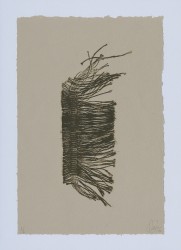
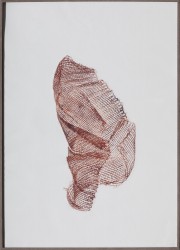
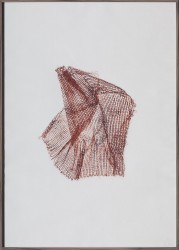
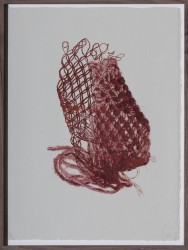
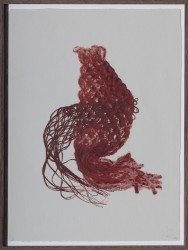
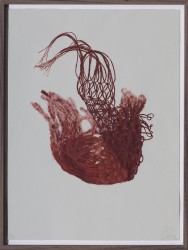
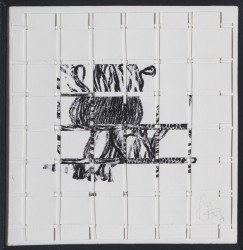
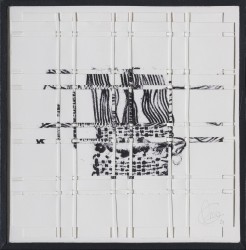
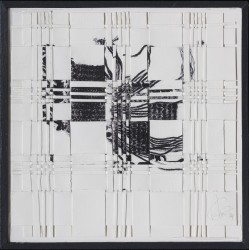
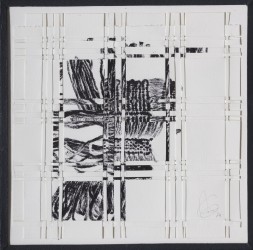
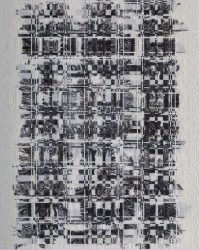
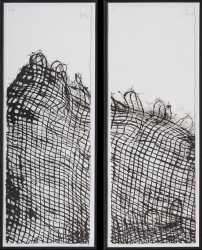
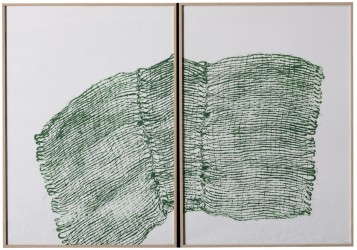
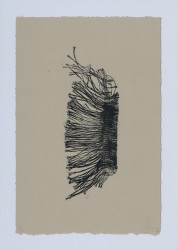
GAILLAC Marie, Fiber prints, guest artist, Jardins inviinvisibles
For me, invisible gardens refer to that intimate space where a language is invented that does not rely on words. It is an inner place, made up of rhythms, repetitions, silences, and breaths. Considering fiber as a living, moving material that evolves and presents us with varied realities depending on its applications is at the heart of my research. The weft is the fabric that makes up everything around us. It is a rhythm, a graphic repetition, it is structure, cell, body, architecture. Printing is a form of analysis, a way of laying bare an internal organization, a skeleton. It is this language that I have chosen to study, one in which each of the fibers I use represents a letter in my alphabet.
Biographical notes
French visual artist, born in 1998, I live and work in the Paris region. Having graduated with a master's degree in contemporary art research from the Sorbonne in 2020, my practice gradually took shape while writing my thesis under the supervision of Élisabeth Amblard and Sandrine Morsillo.
Educated from childhood in the concepts of weaving, the textile industry, and fabric samples, I developed a genuine curiosity for fibers. In my second year of college, I discovered the craft of intaglio engraving. The revelation of a drawing through the printing of what is called a matrix is a technique that immediately captivated me.
In 2019, I created my first works using threads, which I used as matrices in what evolved into a unique fiber printing technique. This technique gave rise to several practices that gradually led me to explore weaving—sculpted, distorted, printed, cut, and braided. The weft takes on various forms with infinite applications.
Approach
My research into weaving began with a desire to work with fiber, to turn it into a piece of work, a body. I owe this intimacy with fiber to the women in my family. Their expertise shaped my relationship with thread. From this transmission, I retained a taste for raw materials and craftsmanship, and an appreciation for the importance of perseverance and a job well done.
I began stamping my fiber works primarily because I wanted to find the meeting point between two forms of expression that had become ingrained in me: weaving and stamping. It was at this point that my fiber sculptures were transformed into matrix bodies, taking on the role of tools whose function is to reveal their imprints on the substrate. Each fiber—jute, hemp, cotton, linen, or wool—has its own identity, its own plastic singularity.
I feel close to the artists of the Support/Surface group: material as language, the deconstruction of the medium, the emphasis on gesture are issues that resonate deeply with me. In my work, fiber draws. Matrix bodies evoke something very intimate: they extend a language that I continue to explore through repetition, variation, and transformation.
By cutting and reweaving my prints, I choose to cover certain parts of the print in order to reveal others. This process makes visible the shapes and rhythms contained in the weft print. This part of my work echoes René Passeron's research on what he calls his In-images: images that are present from the outset, but which must be cut out in order to be fully revealed.
Read moreArtists to
discover-
-
-
-
-
-
-
-
-
-
-
-
-
-
-
-
-
-
-
-
-
-
-
-
-
-
-
-
-
-
-
-
-
-