Available
artworks-
-
-
-
-
-
-
-
-
-
-
BECKA, Photography, guest artist, Jardins invisibles
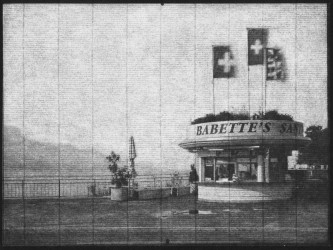
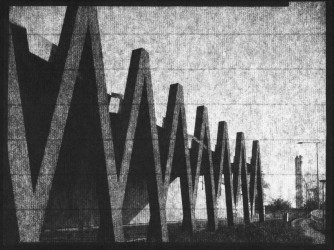
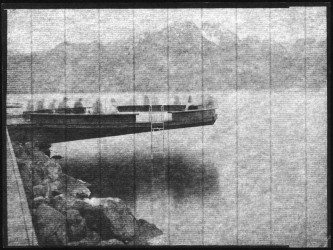
Martin Becka's Territoire series reminds us that exploring a landscape as a photographer means first and foremost slipping into the fabric that connects it to humankind. This complex interplay, which ultimately weaves another world—that of images—seems to rise to the surface of the photograph. It is as if an entire story were inscribed on the surface, defying the usual photographic transparency. This something that exists there constantly clouds our acquired perception: it confuses us and disrupts our knowledge, whether it be our reading of images, places, or time.
Biographical notes - approaches
Martin Becka lives and works in Touraine.
Originally a photojournalist, in the mid-1980s he developed a passion, alongside his press work, for the history and pre-industrial technical processes used by the pioneers of photography.
Martin Becka's photographic series focus mainly on architecture, urban and suburban spaces, and landscapes. By taking a step back and using pre-industrial processes, ordinary places and things take on an unusual dimension in his photographs, feeding the imagination by shifting our perception of reality. A disturbing temporal paradox creeps in: are these landscapes and buildings contemporary? Are they real? Should they be viewed as ruins of the past or as a future vision of our time?
The photographs are taken with a large-format camera (40x50 or 20x25 cm) using the waxed paper negative process, which he makes himself according to Gustave Le Gray's method (1851). Exposure times vary from a few minutes to several tens of minutes. For positive prints, Martin Becka uses various pre-industrial techniques, including salted paper, albumen paper, the palladium process, etc.
Depending on the subjects covered, Martin Becka seeks the rendering best suited to the subject of his various series. Experimentation precedes the technical choice made for the series. It is a long and meticulous process. The rarity of the images obtained praises slowness, brings the photographic object to the forefront, and runs counter to the mass production of images as we know it today. The prints, with their unique textures and lighting, make us feel the fragility of our world and encourage us to enter into one of the states most necessary for the future of humanity: meditation...
Read moreExhibitions
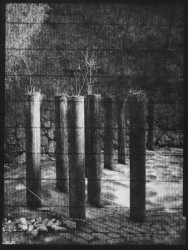
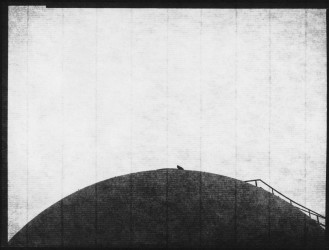
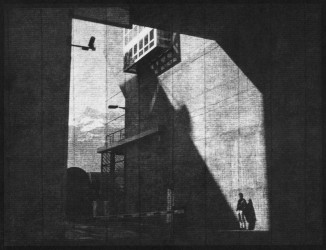
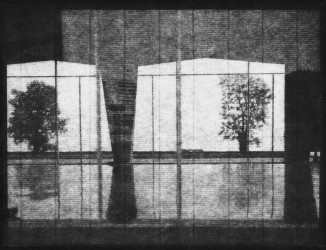
Read more“Territory” series, 2015
The idea for this series emerged during preparations for an exhibition in Switzerland. It is a work focusing on the canton of Vaud.
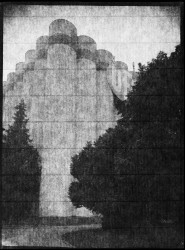
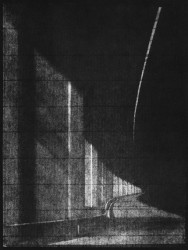
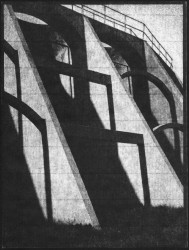
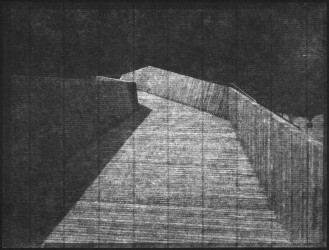
I chose to represent this territory through a multitude of small fragments. A few emblematic places and monuments are present, but they are mainly juxtaposed with more ordinary places: industrial monuments, infrastructure, elements of functional architecture. These are places that are essential to the functioning of a territory but unknown or ignored by most people.
The photographs were taken with a large-format camera (18x24cm) using waxed paper negatives (Le Gray process). The paper chosen for the negatives is laid paper, which visually resembles architectural sketches or the grid of a map. The contact prints are palladium salt prints. The captions for the photographs in the series consist solely of the GPS coordinates of the locations, encouraging the local public to go and discover these overlooked parts of the territory, transformed by the medium of photography.
Artists to
discover-
-
-
-
-
-
-
-
-
-
-
-
-
-
-
-
-
-
-
-
-
-
-
-
-
-
-
-
-
-
-
-
-
-
-